Introduction
If you have recently started playing darts, you have probably asked yourself one simple question: “Is my score actually good?”
It is a common concern. Many beginners practice regularly but are unsure how their performance compares to others. Without a clear benchmark, it becomes difficult to know whether you are improving or simply repeating the same results.
Understanding what a good average score looks like can give you that clarity.
What Is Considered a Good Average Score?
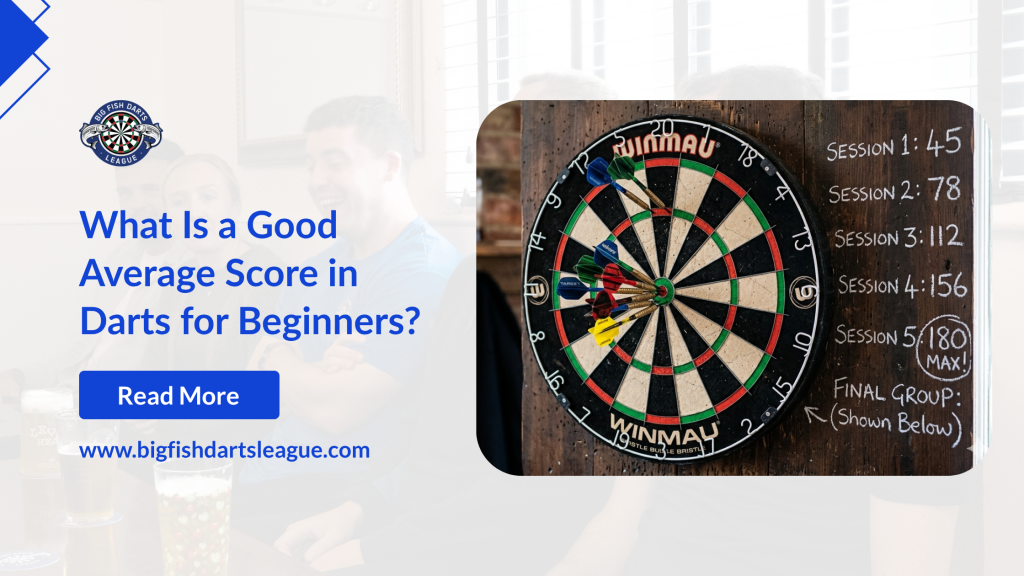
For most beginners, an average score between 30 and 50 points per turn is considered a solid starting range.
This may seem modest, especially if you are comparing yourself to experienced players. However, at the beginner stage, consistency matters far more than high scores.
If you are within this range, you are on the right track.
How Average Scores Typically Improve
Darts is a game of gradual progress. Improvement does not happen overnight.
In the early stages, scores tend to fluctuate. Some turns may feel strong, while others fall short. Over time, as your technique becomes more consistent, your average begins to stabilise.
Eventually, small improvements in accuracy lead to steady increases in your overall score.
What Really Makes the Difference?
The gap between a beginner average and a higher average is not just about skill — it is about consistency.
Players with stronger averages tend to:
- Hit scoring areas more regularly
- Keep their throws controlled and repeatable
- Maintain the same stance and rhythm
In other words, they make fewer mistakes rather than relying on occasional high scores.
How to Tell If You Are Improving
Progress in darts is not always obvious after a single session.
A better way to measure improvement is to look for patterns over time. For example:
- Your lower scores begin to increase
- Your throws feel more controlled
- Your average gradually moves upward
These small signs indicate real progress, even if it feels slow.
Keeping Track of Your Performance
Tracking your scores can make a noticeable difference in how quickly you improve.
Many players use a darts scoring app or a darts scoreboard to monitor their results and build more consistent darts scoring habits over time.
Having a record of your performance makes it easier to stay focused and motivated.
A Real-World Perspective
In the pub darts community UK, most beginners start with modest averages and improve through regular play.
What makes the difference is not talent alone, but consistent participation and experience. Some players also use a UK darts league app to take part in matches and gradually build confidence in real-game situations.
Common Misunderstandings
It is easy to fall into the wrong mindset when starting out.
Many beginners:
- Expect rapid improvement
- Compare themselves to experienced players
- Focus too much on single high scores
In reality, steady and consistent progress is far more valuable than occasional strong performances.
FAQs
Is 40 a good average in darts?
Yes, it is a realistic and solid average for beginners.
How long does it take to improve your average?
It depends on practice, but improvement usually comes gradually over time.
Why does my average stay the same?
This often happens due to inconsistent technique or irregular practice.
Should I focus on high scores or consistency?
Consistency is more important, especially at the beginner stage.
Conclusion
A good average score in darts is not defined by one impressive turn, but by consistent performance over time.
If you focus on building stable technique and tracking your progress, your average will improve naturally. Patience and consistency are key to long-term improvement.